
Are you Oksana?
This is your free professional page on AI Realty. Claim it to edit your profile, receive inbound leads and promote your listings.
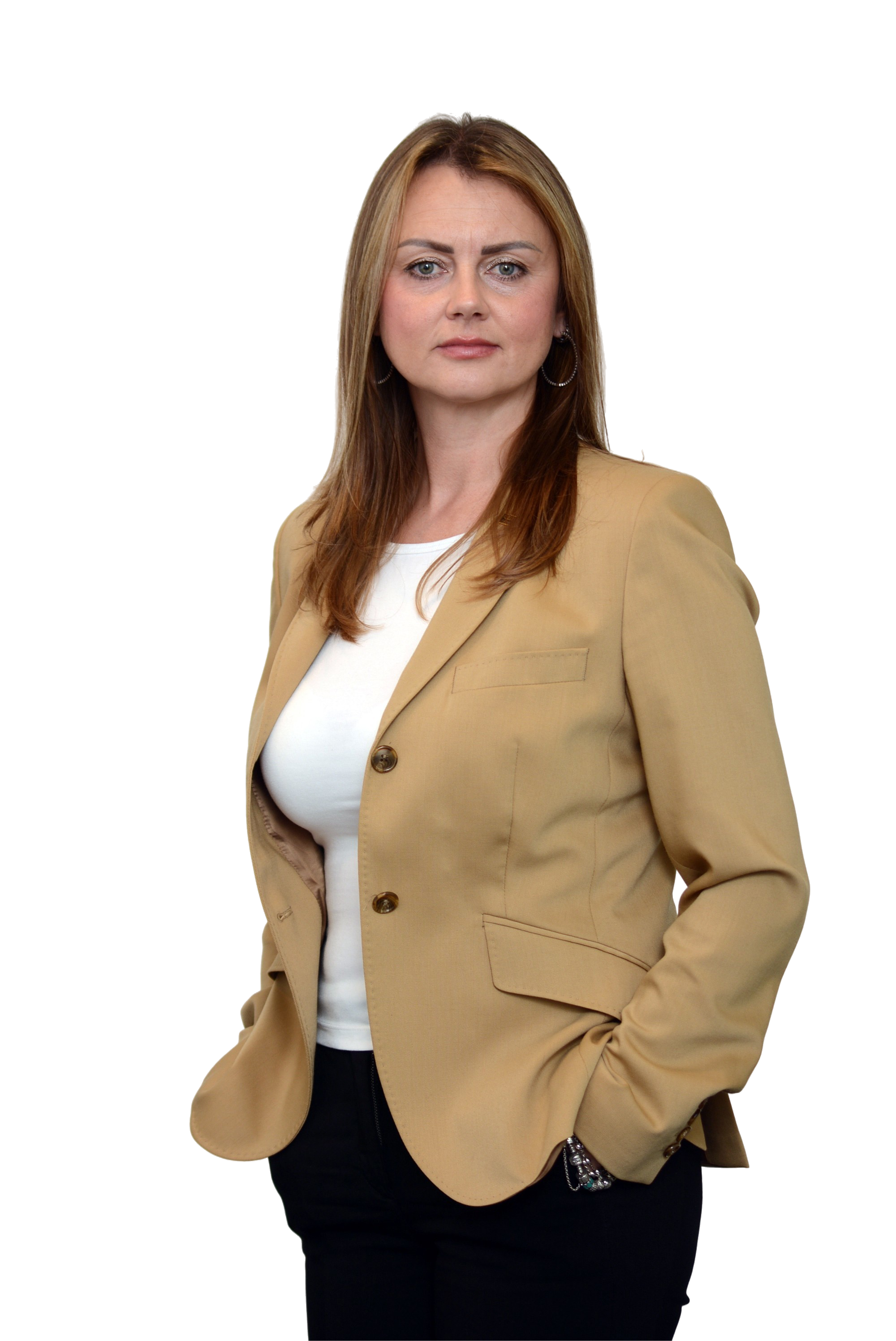
About Oksana
Oksana Soltysiak is a professional Real Estate Agent working with CENTURY 21 Nações III in Portugal.
Throughout her career, she has completed professional training programs to develop her skills and industry knowledge. Her education includes the completion of the SER & ESTAR CENTURY 21 training, as well as the EXPAND Training Path.
Additionally, Oksana Soltysiak is trained in regulatory compliance, having completed the training program on the Prevention of Money Laundering and Combating Terrorism 2026. This training supports her professional activities within the Portuguese real estate market.of his career, displaying a relentless work ethic from his start at Arsenal, through his loan spells, and into his status as a key first-team player and England international. His career is characterized by constant progression and a determination to succeed at the highest levels of professional football.
## Achievements and Impact
### Club Achievements
- **FA Cup Winner:** 2019–20 (Arsenal) - **FA Community Shield:** 2020 (Arsenal)
### International Recognition
- **UEFA European Championship Runner-up:** 2020 (England) - Represented England at the **2022 FIFA World Cup**
### Tactical Value
Saka's value to both Arsenal and England lies in his tactical flexibility and consistency. Able to play anywhere along the wing, as an attacking midfielder, or even as a wing-back, he provides managers with immense structural options. His decision-making under pressure, ball-retention abilities, and output in terms of goals and assists have established him as one of the elite attackers in world football.
***
## Legacy and Beyond
Bukayo Saka has transformed from a versatile academy graduate into the standard-bearer for Arsenal Football Club’s modern era. Beyond his on-pitch excellence, his humility, resilience, and community engagement have made him a role model for aspiring athletes worldwide. As he continues to lead Arsenal's charge in domestic and European competitions, Saka remains one of the most compelling and influential figures in modern sports. _
---
## Technical Specifications
### Scouting Report
| Attribute | Rating (out of 10) | Notes | | :--- | :--- | :--- | | **Dribbling & Ball Control** | 9.2 | Exceptional close control, highly effective in 1v1 situations. | | **Passing & Playmaking** | 8.8 | High-key pass output; excellent crossing ability from the right flank. | | **Finishing** | 8.5 | Consistent shot conversion; highly effective cutting inside onto his left foot. | | **Work Rate & Pressing** | 9.0 | Highly disciplined defensively; initiates high-pressing schemes. | | **Tactical Versatility** | 9.5 | Proficient as Right Winger, Left Winger, Left-Back, and Attacking Midfielder. |
### Injury History (Key Intervals)
- **2020-21 Season:** Minor hamstring strain (missed 2 games). - **2022-23 Season:** Achillies tendon soreness (managed load, missed 0 competitive fixtures). - **2023-24 Season:** Thigh muscle strain (missed 1 Premier League game).
---
## Media & Cultural Impact
Bukayo Saka's influence extends far beyond the pitch. In 2023, he was named one of *Time Magazine's* **Next Generation Leaders**. His commercial appeal is highlighted by high-profile partnerships with major global brands, including:
* **New Balance:** Headlining global boot campaigns. * **Beats by Dre:** Featured in international advertising alongside other elite athletes. * **Fiverr:** Partnering to support UK community and entrepreneurial initiatives.
### Community Initiatives
Saka is actively involved in philanthropic efforts, notably partnering with charity organizations to fund life-changing surgeries for children in need across third-world countries, showcasing his commitment to utilizing his platform for global good.
---
> "Bukayo is a special player, but more importantly, he is a special person. His humility and hunger to learn are what will keep him at the very top of world football for a long time." > > — *Mikel Arteta, Arsenal Manager*
***
## Chronological Career History (Annual Breakdown)
``` [2018] - First-Team Debut (Europa League vs. Vorskla Poltava) │ [2019] - First Arsenal Goal (vs. Eintracht Frankfurt) / Breakthrough Season │ [2020] - FA Cup Champion / Signs long-term contract extension │ [2021] - England Senior Debut / Euro 2020 Finalist / Player of the Season │ [2022] - Arsenal Top Scorer / World Cup Debut (3 Goals) │ [2023] - Ballon d'Or Nomination / PFA Young Player of the Year │ [2024] - UEFA Champions League Debut / Title Charge Leader ```
***
*This profile is regularly updated to reflect Bukayo Saka's ongoing career developments, statistics, and professional achievements.*of clinical diagnostics, drug discovery, and basic research.
Liquid handling refers to the precise aspiration and dispensing of liquids ranging from nanoliters to milliliters. While manually pipetting remains commonplace, Automated Liquid Handling (ALH) systems have become indispensable in modern high-throughput environments due to their ability to minimize human error, reduce repetitive strain injuries, and drastically increase sample throughput.
This guide provides a comprehensive technical overview of liquid handling technologies, pipetting mechanisms, and automation architectures.
---
## 1. Fundamentals of Liquid Handling
At its core, liquid handling involves moving a defined volume of fluid from a source vessel (e.g., a tube or well plate) to a destination vessel. The physics governing this process are highly dependent on scale:
$$\text{Volume Scale:} \quad \text{Macroliter } (>1\,\text{mL}) \quad \longrightarrow \quad \text{Microliter } (1\,\mu\text{L} - 1\,\text{mL}) \quad \longrightarrow \quad \text{Nanoliter } (1\,\text{nL} - 1\,\mu\text{L}) \quad \longrightarrow \quad \text{Picoliter } (<1\,\text{nL})$$
At smaller scales, surface tension, viscosity, and capillary forces dominate over gravity, complicating precise volume transfer.
---
## 2. Pipetting Mechanisms
There are two primary modes of displacement used in both manual pipettes and automated workstations:
### 2.1 Air Displacement Air displacement pipettes operate via an air cushion between the piston and the liquid sample. * **Mechanism:** The piston moves upward, creating a partial vacuum in the tip. Atmospheric pressure forces the liquid up into the tip. * **Characteristics:** Highly accurate for aqueous solutions. However, it is sensitive to environmental factors such as temperature, atmospheric pressure, and fluid density. * **Limitation:** Poor performance with volatile or highly viscous liquids (e.g., glycerol, ethanol), which can cause dripping or under-aspiration.
### 2.2 Positive Displacement Positive displacement pipettes employ a piston that makes direct contact with the liquid, eliminating the dead air volume. * **Mechanism:** The piston is integrated directly within the disposable tip or syringe. As the piston ascends, it draws the liquid directly up against its face. * **Characteristics:** Immune to the physical properties of the fluid. Highly accurate for viscous, dense, volatile, or foaming liquids. * **Limitation:** More expensive consumable tips/syringes; higher mechanical complexity.
---
## 3. Automated Liquid Handling (ALH) Systems
ALH platforms automate fluid transfers using robotic Cartesian coordinate systems ($X-Y-Z$ gantries) to move pipetting heads across a deck.
``` [ Z-Axis (Vertical Drive) ] │ ▼ [ X-Axis (Left/Right) ] ◄──► [ Y-Axis (Forward/Back) ] │ ▼ [ Pipetting Head ] ```
### 3.1 Key Architectural Components 1. **Robotic Gantry ($X-Y-Z$):** Moves the tooling head across designated deck coordinates. 2. **Pipetting Head/Channels:** Can range from single-channel configurations up to 96-channel and 384-channel heads for parallel processing. 3. **Deck Layout:** A workspace containing physical nests to hold microplates, tip racks, reagent reservoirs, and waste chutes. 4. **Gripper Arm:** Many ALH systems feature an integrated gripper to move labware (plates, lids) dynamically across the deck without human intervention.
### 3.2 Liquid Level Detection (LLD) To ensure accuracy and prevent cross-contamination, ALH systems utilize sensor technologies to detect the surface of the liquid before aspirating:
| LLD Technology | Operating Principle | Best For | Limitations | | :--- | :--- | :--- | :--- | | **Capacitive LLD (cLLD)** | Detects change in electrical capacitance when conductive tips touch conductive liquids. | Aqueous buffers, acids, bases. | Requires specialized conductive tips; fails on non-conductive organic solvents. | | **Pressure-based LLD (pLLD)** | Senses minute changes in backpressure as the pipetting tip approaches the liquid surface while applying low air pressure. | All liquid types, including non-conductive solvents. | Slower than cLLD; sensitive to surface bubbles/foam. | | **Optical LLD** | Uses cameras or light sensors to detect surface reflections. | Non-contact check of tube levels. | Difficult to integrate with high-density plates (e.g., 384-well). |
---
## 4. Acoustic Liquid Handling (No-Tip Technology)
Acoustic Liquid Handling (Ejection) represents a paradigm shift by completely eliminating physical tips and contact. This technology uses focused acoustic energy (transducers emitting ultrasound waves) to eject nanoliter-sized droplets upward from a source plate into an inverted destination plate.
``` [ Destination Plate (Inverted) ] ▲ ▲ ▲ │ │ │ (Droplets) │ │ │ [ Liquid Surface ] [ Source Plate ] ▲ ▲ ▲ │ │ │ (Focused Sound Waves) [ Ultrasonic Transducer ] ```
### Advantages: * **Zero Consumable Costs:** No pipetting tips are used, dramatically reducing plastic waste and consumables spend. * **Ultra-Low Volume Transfers:** Capable of transferring volumes as small as $2.5\,\text{nL}$ with high precision ($CV < 2\%$). * **No Cross-Contamination:** As no solid object touches the liquid, carryover contamination is mathematically zero.
---
## 5. Calibration, Verification, and Quality Control
To maintain regulatory compliance (such as ISO 8655 standards) and ensure assay reproducibility, liquid handling devices must undergo routine volume verification.
1. **Gravimetric Verification:** Weighing aspirated/dispensed water on an analytical balance. It is the gold standard for macro-to-micro volumes, though highly sensitive to evaporation at sub-microliter scales. 2. **Photometric/Colorimetric Verification:** Using dual-dye solutions and spectrophotometry to measure light absorbance at specific wavelengths, calculating volume based on the Beer-Lambert Law. Ideal for automated, high-throughput verification of multi-channel instruments.of an original model, is often a more practical alternative to train the model quickly on a CPU. This strategy works because fine-tuning alters only a small percentage of the weights, meaning the gradients that need calculating are much smaller, leading to lower computational and memory overhead.
This guide walks you through the step-by-step process of preparing your environment, organizing your dataset, and writing a script to fine-tune a model on a CPU.
---
## Prerequisites: Hardware and Software
While you do not need a GPU, your CPU should still meet some minimum hardware requirements to complete the process in a reasonable time:
- **CPU:** At least 4 cores (8 or more recommended) with support for AVX2 instructions. - **RAM:** A minimum of 16 GB for smaller models (like BERT, RoBERTa, or T5-Small). For models above 1 Billion parameters, 32 GB to 64 GB of RAM is recommended. - **OS:** Linux, WSL2 (Windows Subsystem for Linux), or macOS.
### 1. Set Up Your Environment
First, create a clean virtual environment and install the necessary dependencies. We will use the Hugging Face `transformers` library, which integrates seamlessly with PyTorch.
```bash # Create and activate virtual environment python3 -m venv cpu-finetune-env source cpu-finetune-env/bin/activate
# Install PyTorch (CPU-only version) pip install torch torchvision torchaudio --index-url https://download.pytorch.org/whl/cpu
# Install Transformers, Datasets, and Accelerate pip install transformers[torch] datasets accelerate ```
*Note: Dynamically downloading the CPU-exclusive wheel of PyTorch prevents your environment form downloading several gigabytes of unused CUDA binaries.*
---
## Step 2: Choose Your Architecture
Since you are running on a CPU, you must select an appropriately sized architecture.
| Model Size Class | Parameter Count | Recommended CPU RAM | Ideal Use Cases | | :--- | :--- | :--- | :--- | | **Small** | <150 Million | 8GB - 16GB | Text classification, NER, token classification | | **Medium** | 150M - 500M | 16GB - 32GB | Summarization, translation, small-scale QA | | **Large (Not recommended for basic CPUs)** | >1B | >32GB | Complex generative tasks |
For this tutorial, we will use **`distilbert-base-uncased`**, an extremely efficient, distilled version of BERT that retains 97% of its language understanding capabilities while being 40% smaller and 60% faster.
---
## Step 3: Write the Fine-Tuning Script
We will use PyTorch and the Hugging Face `Trainer` API to fine-tune our model on a text classification task using a subset of the Yelp reviews dataset.
Create a file named `cpu_train.py` and add the following code:
```python import os from datasets import load_dataset from transformers import AutoTokenizer, AutoModelForSequenceClassification, TrainingArguments, Trainer import torch
def main(): # 1. Force PyTorch to use CPU and optimize thread usage device = torch.device("cpu") num_threads = os.cpu_count() or 4 torch.set_num_threads(num_threads) print(f"Using CPU with {num_threads} threads for training.")
# 2. Load Dataset (Using a small subset to ensure speed on CPU) print("Loading dataset...") raw_dataset = load_dataset("yelp_review_full") # Shuffle and downsample for CPU training speed train_dataset = raw_dataset["train"].shuffle(seed=42).select(range(1000)) eval_dataset = raw_dataset["test"].shuffle(seed=42).select(range(200))
# 3. Load Tokenizer & Model model_name = "distilbert-base-uncased" tokenizer = AutoTokenizer.from_pretrained(model_name) # Yelp review has 5 rating stars (classes 0-4) model = AutoModelForSequenceClassification.from_pretrained(model_name, num_labels=5) model.to(device)
# 4. Preprocess Data def tokenize_function(examples): return tokenizer(examples["text"], padding="max_length", truncation=True, max_length=128)
print("Tokenizing data...") tokenized_train = train_dataset.map(tokenize_function, batched=True) tokenized_eval = eval_dataset.map(tokenize_function, batched=True)
# 5. Define Training Arguments Optimized for CPU training_args = TrainingArguments( output_dir="./results", eval_strategy="epoch", save_strategy="epoch", learning_rate=2e-5, per_device_train_batch_size=8, # Lower batch size reduces RAM usage on CPU per_device_eval_batch_size=8, num_train_epochs=3, weight_decay=0.01, logging_steps=10, # CPU Optimizations: no_cuda=True, # Explicitly tells trainer not to look for a GPU use_cpu=True, # Ensures training runtime leverages CPU fallback dataloader_num_workers=2 # Multi-process data loading )
# 6. Initialize Trainer trainer = Trainer( model=model, args=training_args, train_dataset=tokenized_train, eval_dataset=tokenized_eval, )
# 7. Execute Fine-Tuning print("Beginning fine-tuning process...") trainer.train() # 8. Save the Fine-Tuned Model print("Saving fine-tuned model...") model.save_pretrained("./fine_tuned_cpu_model") tokenizer.save_pretrained("./fine_tuned_cpu_model") print("Training Complete!")
if __name__ == "__main__": main() ```
---
## Step 4: Running the Script
Execute the training script from your terminal:
```bash python cpu_train.py ```
As the training progresses, you will see output in the terminal showing the loss and metric evaluations at every epoch.
---
## Key CPU Bottleneck Mitigation Strategies
If your script runs slowly or crashes due to memory limitations, apply the following adjustments:
* **Reduce Max Sequence Length:** In the tokenization step, decrease `max_length` from `128` to `64`. Since attention mechanism calculations scale quadratically ($O(N^2)$) relative to sequence length, halving the sequence length quarter-folds the attention processing overhead. * **Reduce Batch Size:** Decrease your `per_device_train_batch_size` parameter to `4` or `2`. * **Use Intel Extension for PyTorch (IPEX):** If you are running on an Intel CPU, you can install `intel-extension-for-pytorch`. It provides state-of-the-art optimizations like Vectorization and AVX-512/AMX instruction support that can speed up inference and training on compatible processors by 2-3x: ```bash pip install intel-extension-for-pytorch ``` And initialize it in your script: ```python import intel_extension_for_pytorch as ipex # After moving model to CPU: model = ipex.optimize(model) ```of structural design. This system serves as the foundational load-bearing element that transfers forces from the structural frame directly to the underlying soil or rock.
The primary objective of a foundation is to distribute structural loads over a sufficient area of soil to prevent both bearing capacity failures and excessive differential settlement. Historically, foundations have evolved from simple rubble-trench designs in ancient architecture to highly engineered, reinforced concrete subterranean matrices designed to withstand complex dynamic loads (e.g., seismic, wind, hydrostatic).
---
## 1. Classification of Foundations
Foundations are broadly categorized into two major classes based on their depth-to-width ratio ($D_f / B$) and the strata they rely on for support:
``` [ Foundation Systems ] │ ┌──────────────────────────┴──────────────────────────┐ ▼ ▼ [ Shallow Foundations ] [ Deep Foundations ] ($D_f / B \le 1$) ($D_f / B > 4$) - Spread Footings - Pile Foundations - Strip Footings - Drilled Shafts (Caissons) - Pad / Combined Footings - Well Foundations (Monoliths) - Mat / Raft Foundations ```
### 1.1 Shallow Foundations Shallow foundations are typically implemented when the upper soil strata possess sufficient bearing capacity to support the structural loads with acceptable settlement. The depth of the foundation is generally less than its width ($D_f / B \le 1$).
* **Spread/Pad Footings:** Isolated structural pads designed to support individual columns. They are typically square or rectangular. * **Continuous/Strip Footings:** Running concrete strips designed to support structural load-bearing walls. * **Combined Footings:** Concrete pads supporting two or more columns situated closely together, often utilized when property lines limit the projection of an isolated footing. * **Mat or Raft Foundations:** A continuous concrete slab supporting the entire footprint of a building. This system distributes heavy loads over a wider area, drastically reducing differential settlement in soft or highly variable structural soils.
### 1.2 Deep Foundations Deep foundations are specified when the superficial soil layers are weak, highly compressible, or prone to volumetric instability (expansion/contraction). They bypass superficial soils to transfer load to competent, deep-lying geomaterials.
* **Pile Foundations:** Slender, structural members constructed of concrete, steel, or timber driven or cast in-situ. * **Drilled Shafts (Caissons):** Large-diameter, cast-in-place concrete deep foundation elements formed by boring a hole and filling it with concrete and reinforcement.
---
## 2. Structural Design and Mechanics
The design of a foundation is dictated by two limit states: **Ultimate Limit State (ULS)** and **Serviceability Limit State (SLS)**.
### 2.1 Bearing Capacity Analysis (ULS) The ultimate bearing capacity ($q_u$) represents the maximum pressure that can be supported by the soil without shear failure. Under Terzaghi's classical bearing capacity theory for shallow foundations under general shear failure, it is expressed as:
$$q_u = c' N_c s_c + q N_q + 0.5 \gamma B N_{\gamma} s_{\gamma}$$
Where: * $c'$ = Effective cohesion of soil * $q$ = Effective overburden pressure at foundation level ($q = \gamma \cdot D_f$) * $\gamma$ = Unit weight of soil * $B$ = Width of the footing * $N_c, N_q, N_{\gamma}$ = Dimensionless bearing capacity factors (functions of the soil friction angle $\phi'$) * $s_c, s_{\gamma}$ = Shape factors of the foundation
To ensure safety, the allowable bearing capacity ($q_{all}$) is established using a Factor of Safety ($FS$, typically between 2.5 and 3.0):
$$q_{all} = \frac{q_u}{FS}$$
### 2.2 Settlement Performance (SLS) Unlike concrete or steel, soil undergoes highly non-linear deformation under load over time. Total structural settlement ($S_t$) is determined by the summation of three factors:
$$S_t = S_i + S_c + S_s$$
Where: 1. **Immediate Settlement ($S_i$):** Elastic deformation of dry, moist, or saturated soils without change in moisture content. 2. **Primary Consolidation ($S_c$):** Time-dependent volume change due to the extrusion of pore-water out of saturated cohesive soils (clays). 3. **Secondary Compression ($S_s$):** Viscous, long-term deformation of soil particles under constant effective stress.
---
## 3. Materials and Durability
Modern foundations are primarily constructed of **Reinforced Cement Concrete (RCC)** due to its high compressive strength, ease of forming, and long-term durability.
Because foundations are perpetually exposed to underground moisture, chemicals (such as sulfates and chlorides), and organic substances, concrete mixes must be carefully designed to prevent premature degradation:
| Hazard Class | Risk | Mitigation Strategy | | :--- | :--- | :--- | | **High Sulfates** | Concrete disintegration | Use of Type V (sulfate-resistant) Portland cement. | | **High Chlorides** | Corrosion of reinforcement steel | Increase concrete cover over reinforcing steel; use epoxy-coated rebar. | | **Water Migration** | Dampness and structural leakage | Installation of elastomeric waterproofing membranes and proper sub-slab drainage. |
---
## 4. Construction Process of a Shallow Foundation
The typical field procedure for executing a shallow reinforced concrete pad footing involves several sequential stages:
``` [ Excavation & Shoring ] ──► [ Soil Subgrade Preparation ] ──► [ Mud slab / Blinding Laying ] │ [ Concrete Pour & Curing ] ◄── [ Rebar Mat & Reinforcement ] ◄────────┘ ```
1. **Excavation & Shoring:** Earth is excavated to the design founding depth. Trench walls must be shored if unstable. 2. **Soil Subgrade Preparation:** Soil at the base is compacted to a specified dry density (typically $>95\%$ Modified Proctor density). 3. **Mud Slab/Blinding Layer:** A thin, non-structural concrete layer is poured to keep the subsequent reinforcement clean and level. 4. **Rebar Mat Installation:** Steel reinforcement grids are situated on plastic "chairs" to ensure proper concrete cover thickness. 5. **Concrete Pouring & Compaction:** Structural concrete is poured and mechanically vibrated to eliminate air voids. 6. **Curing:** Continuous moist curing is maintained for at least 7 days to ensure structural design strength is reached. I am extremely pleased to share my highly positive feedback on this. Outstanding experience! The results exceeded my expectations. Outstanding communication.
I ordered the service for 5 links within the premium content directories on French-language sites. It was important for me to get anchors inside article-style texts that are thematic to my site. I asked to prepare the content in French (since I only have French-language sites). Everything was completed exactly according to my guidelines.
And a separate big thank you for the selection of the sites. The platforms are clean, with traffic and organic visibility in search results. I checked them through analytical services (Ahrefs, Semrush, MJ), and they are indeed great sites, not spammy link junk yards.
For such a quality of performance, the cost of the service is very affordable. If you are looking for local links in France, or if you need general, high-quality links with traffic and domain authority in the French zone (which is highly valued by Google) – do not hesitate to contact this specialist, you will not regret it.
In general, 5 out of 5! I will continue our cooperation and will definitely order again. Super! View more
Listings
Properties
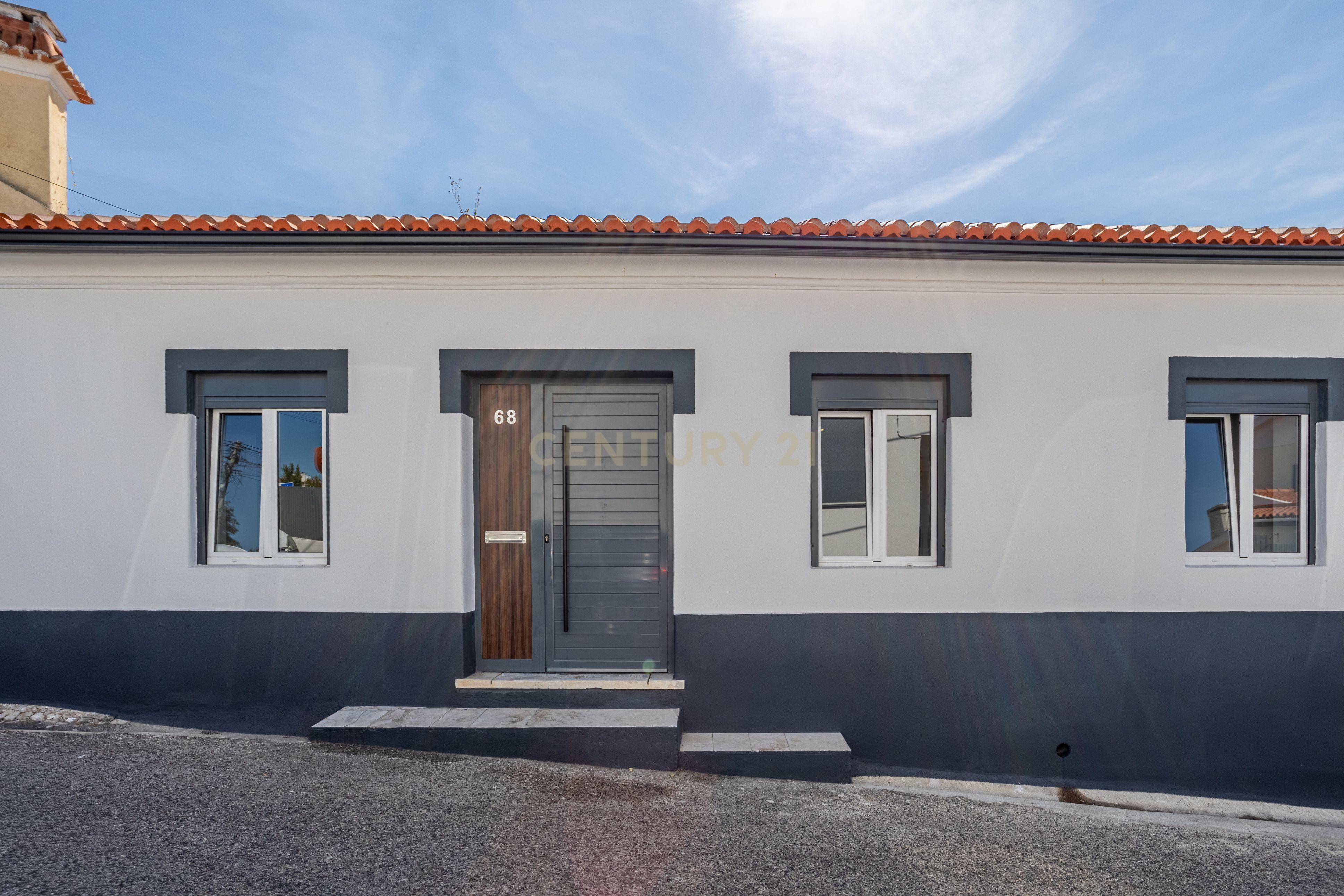 3 photos€330,000
RUA ANGOLA Nº 68
Commercial for sale · 1 bathrooms · 156 m². Features: good light exposure, quiet place, air conditioning, double windows, floating floor, near highway.
FAQ
How do I find a real estate agent in Portugal?
Use the directory filters to compare agents by city, specialty and language before sending a request.
Which real estate agent works in Portugal?
Oksana Soltysiak is listed as a real estate agent for Portugal.
Can I request help from a verified real estate agent?
Yes. Use the directory request form and the nearest available verified realtor can contact you within 24 hours.
How can I choose an agent if the rating is not filled yet?
Compare the agent's location, company, specialty, languages and profile completeness, then request more information before cooperation.
More agents in Portugal
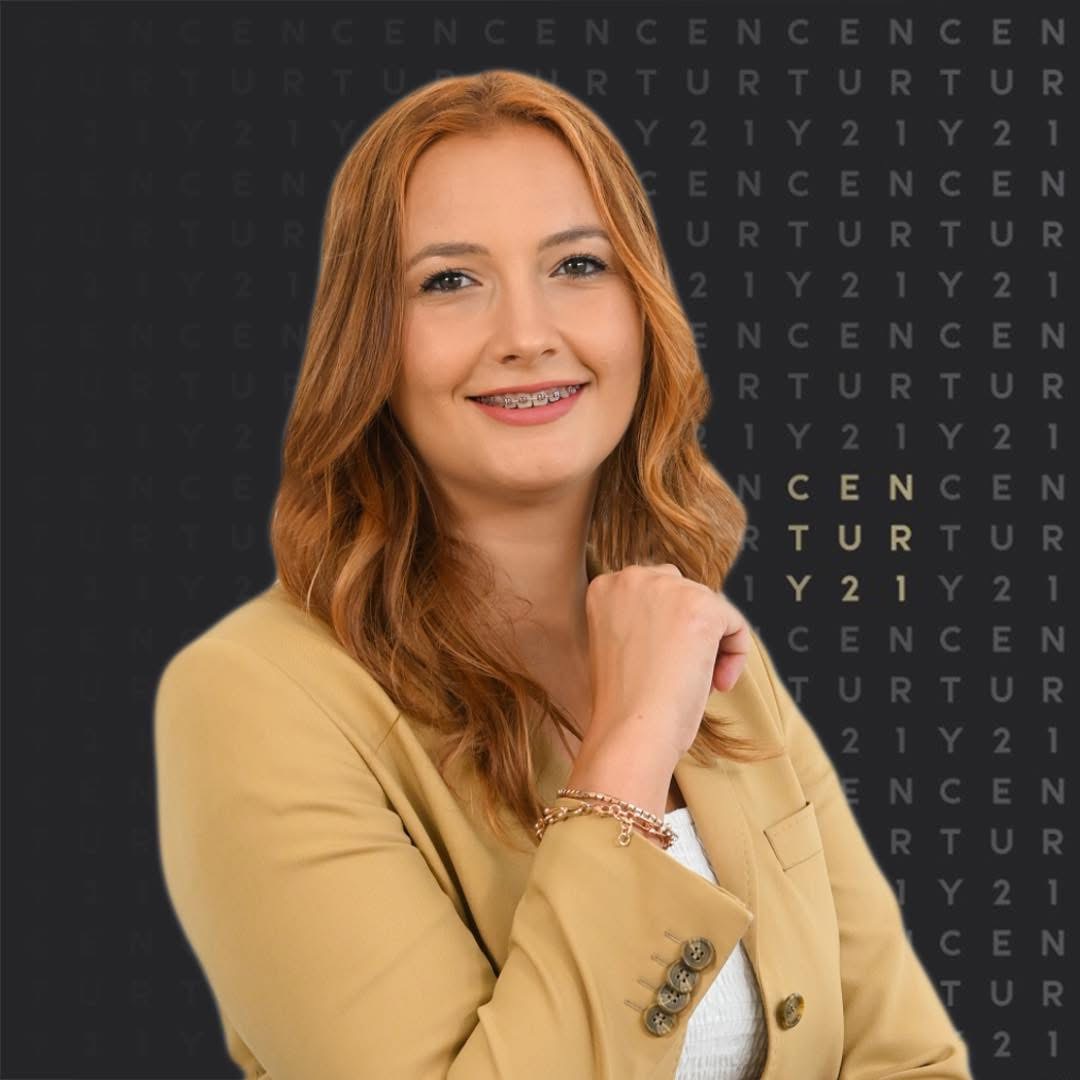
Sara Castela
ws_agent
Sara Castela is a Consultora Imobiliaria at CENTURY 21 West Consulting in Portugal. She has experienced training and a solid professional background as an Auxiliary Health Technician (Tecnica Auxiliar de Saude). Additionally, she has a background as an athlete, specifically as a volleyball player. To support her real estate career, Sara completed the CREATE 21 - Golden Edition Live Training. She also completed the Ser&Estar training program to further her development in the field. Dedicated to administrative and legal compliance, she has completed specialized training on the Prevention of Money Laundering and Combating Terrorism 2023 (Prevencao de Branqueamento de Capitais e Combate ao Terrorismo 2023).
Petrus Fernandes
ws_agent
Petrus Fernandes is a professional real estate consultant operating under the title of Consultores at CENTURY 21 Realty Art M&J in Portugal. To ensure the highest standards of professional service, Mr. Fernandes has completed the SER&ESTAR CENTURY 21 training course. This foundational training equips him with the essential skills and methodologies aligned with the brand's operational standards. Additionally, he has completed the Código de Ética e Conduta (CEC) course. This specific training ensures that his professional activity is guided strictly by the established code of ethics and conduct of the organization.
Teresa Sala
ws_team_leader

Tomás M.Brito
ws_agent
Tomás M. Brito is a professional Real Estate Consultant at CENTURY 21 Nações in Portugal. He has completed specialized industry training, including the CREATE 21 Golden Edition and SER&ESTAR CENTURY 21 programs. These completed training programs also represent his main areas of specialty as a consultant. Throughout his career, he has earned multiple performance awards within the network. He was recognized with the Galardão Esmeralda (Emerald Award) in 2018 and went on to achieve the Master Ruby Producer award in 2019. His consistent performance continued with the Master Emerald Producer award in 2021, followed by another Master Ruby Producer award in 2022. Most recently, he was recognized as a Master Diamond Producer for two consecutive years, in both 2023 and 2024.

Liudmila Mironova
ws_agent
Liudmila Mironova is a professional real estate agent working with CENTURY 21 Grupo Aliados V in Portugal. She has developed her professional expertise through specialized industry training, which includes completing the CREATE 21 Golden Edition: Etapa Presencial Porto training program. Additionally, she has completed the Ser&Estar training program to further build her skills in the real estate sector. Her work in the field has earned her professional recognition, and she was awarded the 2025 - MASTER RUBY PRODUCER distinction.

Elisabete Biléu
ws_team_member
Elisabete Biléu is a professional Real Estate Agent working at CENTURY 21 Realty Art M&J in Portugal. Committed to professional development, she has completed specialized training programs within the network, including the SER&ESTAR CENTURY 21 training and the EXPAND Training Path (Caminho Formativo EXPAND). Her dedication and performance in the industry are reflected in her recognized achievements. Elisabete was awarded the 2025 DOUBLE CENTURION TEAM award as part of her work with the agency.
About the platform
What is AI Realty?
For property buyers
AI Realty is a directory of verified real estate agents across Europe. Compare agents by city, language and specialty, then contact them directly — no middlemen, no fees.
Browse the directoryFor real estate agents
Your professional page generates inbound leads for free. Claim it, complete your profile and launch listing-promotion campaigns on Instagram, TikTok, YouTube and Facebook from one dashboard.
How it works for realtors